
Learning how to make money as a voice actor online is one of the most realistic ways to earn from home with a skill you may already have: your voice. Businesses need voices for ads, YouTube videos, audiobooks, phone systems, and online courses — and most of that work is now recorded in home studios, not expensive recording facilities.
This beginner's guide explains what voiceover work actually involves, the setup you need, where to find paid gigs, what beginners typically earn, and the mistakes that slow most newcomers down. No overnight-income promises here: voice acting is a skill business, and it rewards practice and consistency over weeks and months.
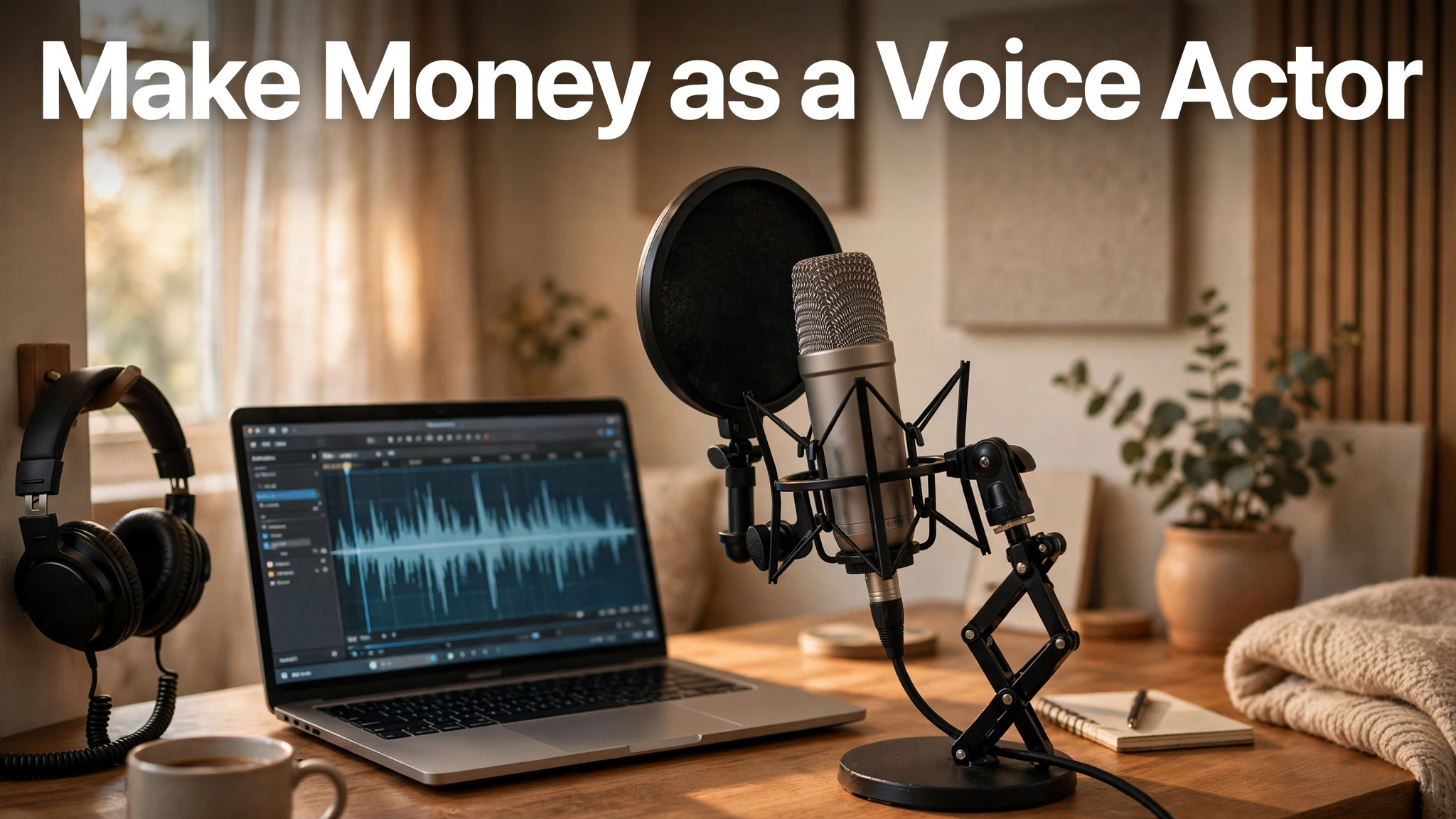
How to Make Money as a Voice Actor Online: What the Work Actually Looks Like
A voice actor records spoken audio that someone else uses in their project. Clients hire you for the sound of your voice, but just as much for your ability to read a script naturally, take direction, and deliver clean audio on time. The main types of paid voiceover work are:
1. Commercials and online ads
Short scripts for radio, TV, and online ads. These pay the best per minute of recording, but they are also the most competitive, and clients usually want a confident, natural delivery.
2. YouTube narration and e-learning
Channels and course creators need narration for videos, tutorials, and training material. This is often the easiest entry point for beginners because there is a steady supply of work and the style is conversational.
3. Audiobooks
Authors and publishers hire narrators to turn books into audio. Platforms like ACX, Audible's marketplace, let beginners audition for books and get paid per finished hour or through royalty share.
4. Corporate and explainer videos
Companies need voices for product explainers, training videos, and phone systems. The tone is usually calm and professional, and repeat clients are common once you prove reliable.
5. Characters, games, and animation
Fun and creative, but the hardest to break into as a beginner. It helps to build a separate character demo later, after you have some commercial or narration work behind you.
Most beginners start with narration and explainer work, then expand into commercials and audiobooks as their demo and reviews grow.
How to Make Money as a Voice Actor Online: Step-by-Step Breakdown
Step 1: Train your voice before you buy gear
Voice acting is acting. Read aloud every day — ads, product pages, children's books — and record yourself to hear flat delivery, rushed pacing, and mouth noise. A local acting or improv class helps more than an expensive microphone at this stage.
Step 2: Set up a quiet recording space
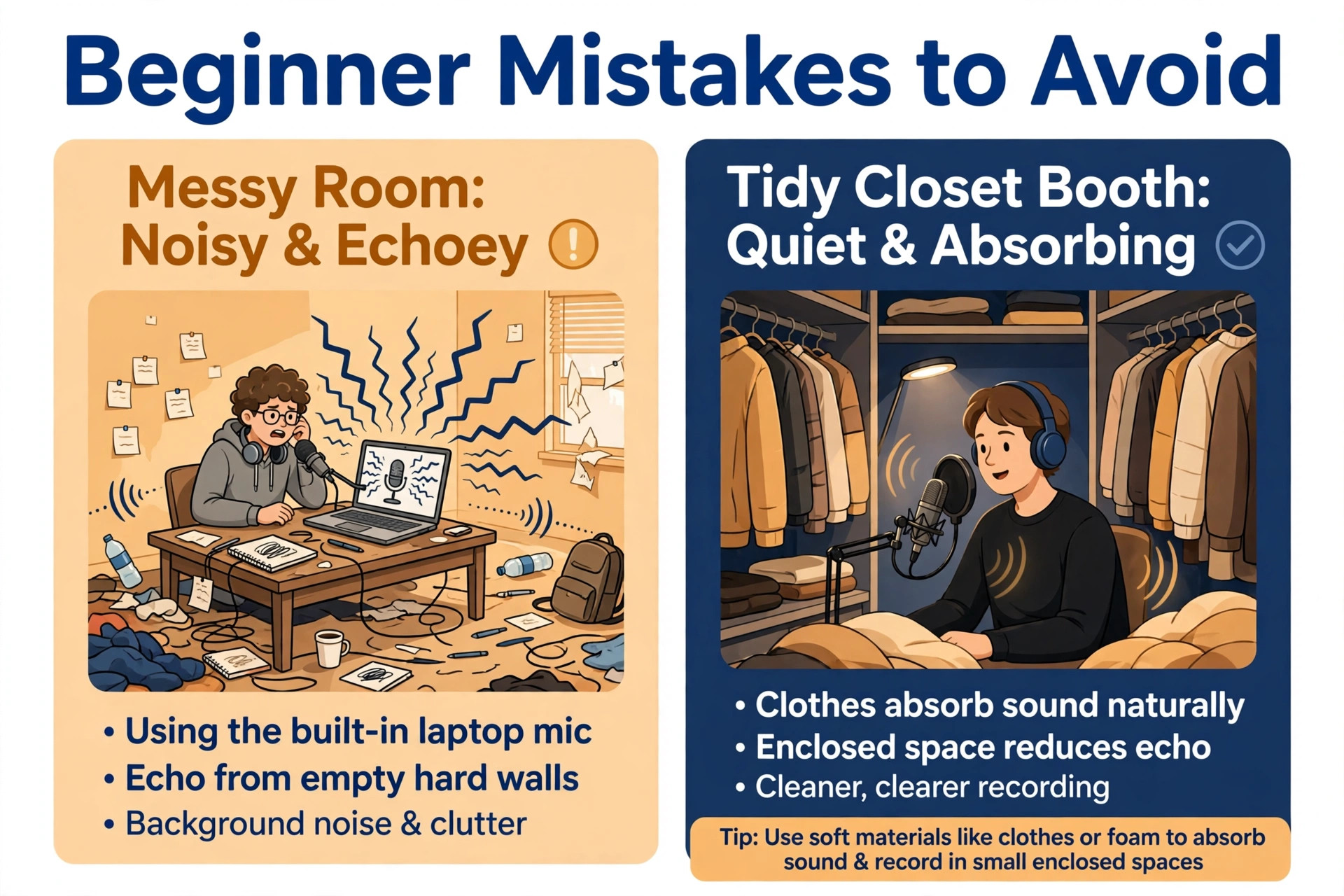
You do not need a professional studio. A walk-in closet full of clothes is one of the best beginner booths because fabric absorbs echo. Avoid empty rooms with hard walls, fans, and street noise — clients reject echoey, noisy audio no matter how good the voice is.
Step 3: Get a decent microphone and free software
Skip the built-in laptop microphone. A USB microphone such as the Samson Q2U or Audio-Technica ATR2100x is a solid beginner choice, and Audacity is free software that handles recording and basic editing well. Learn to remove breaths, cut mistakes, and export clean files.
Step 4: Record a short demo reel
A demo reel is a 60 to 90 second sample of your best reads. Record two or three different styles — for example, one friendly commercial read and one calm narration read — and keep each clip short. Clients decide within seconds, so put your strongest read first.
Step 5: Join the right platforms
Start with the free ones. ACX is free to join and needs no approval, making it a good first door for audiobooks. Fiverr is free to list gigs on, though it takes 20 percent of each order. Upwork works well for longer-term clients. Voice123 has a free starter plan, while Voices.com charges for premium access — avoid paying for a membership before you have a demo and a few paid jobs.
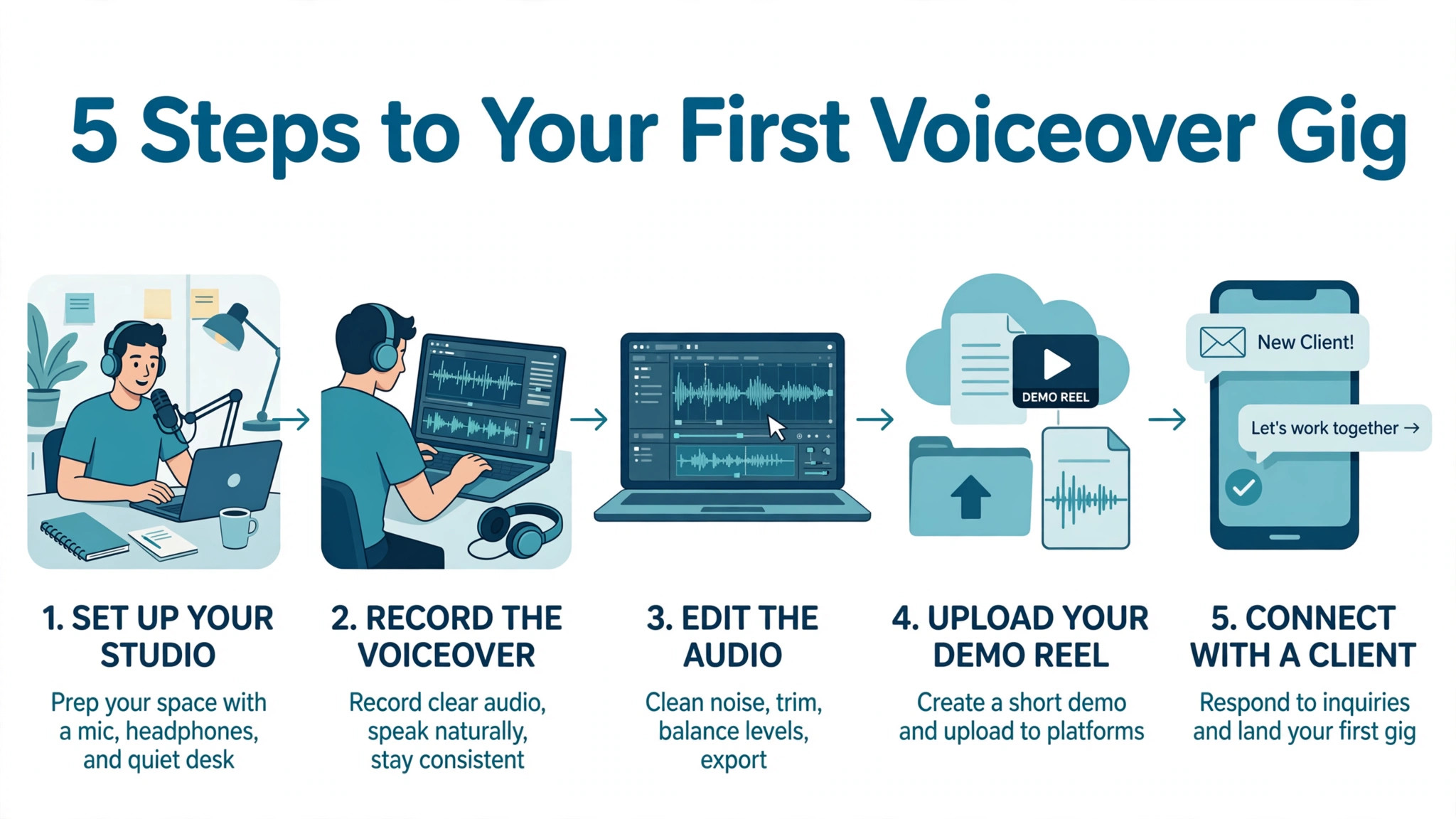
Step 6: Price your first jobs to win reviews
Beginners often charge 20 to 75 dollars for a short script of around 100 words, and 50 to 250 dollars per finished hour for audiobook narration. Early on, slightly lower rates that win you real reviews are worth more than high rates that win nothing. Raise your prices as your reviews and repeat clients grow.
Step 7: Audition often and follow up
Treat auditions like a numbers game with quality. Apply daily on the platforms you joined, read the brief carefully, and deliver exactly what was asked. A short, polite follow-up after a few days is fine — silence is not rejection, it is usually just a busy client.
What Beginners Typically Earn
Rates vary widely by project type, experience, and usage — where and how long the recording will be used. For context, the US Bureau of Labor Statistics reports a median hourly wage of $29.05 for actors (May 2025), though freelance voiceover pay is set per job, not per hour. Voice123 reports an average project budget of about $350 for English-language projects. Beginners commonly earn a few hundred dollars a month as a side hustle, with part-time voice actors earning more as their client base grows. These are industry figures, not a promise of what you will earn — your results depend on your skill, niche, consistency, and how many auditions you send.
Mistakes to Avoid
Recording in an echoey room with a laptop microphone and expecting clients to accept it. Spending hundreds of dollars on gear before practising the acting. Paying for a premium casting membership before you have a demo. Sending the same generic audition to every job instead of reading the brief. Quitting after a week of no replies — most beginners send many auditions before the first paid gig lands.
What to Expect Realistically
Think of voice acting as a skill business, not a quick side hustle. Your first paid gig may take weeks of auditioning, and your first months may bring only a few small jobs. The work compounds: each finished job adds a review, a sample, and sometimes a repeat client. Give yourself at least three to six months of steady practice and auditioning before judging whether it works for you. Results vary with voice quality, acting skill, audio quality, niche, and consistency.
Related Guides
New to freelancing in general? Read our guide to making money on Fiverr for marketplace basics that also apply to voiceover gigs. Browse all our earning guides on the Online Earning hub.
FAQs
Do I need a professional studio to start voice acting?
No. A quiet closet with clothes, a decent USB microphone, and free editing software are enough to record auditions and small jobs. Upgrade your space and gear only when paid work justifies it.
Do I need experience to get voice over jobs?
No credits are required to start. Clients hire the read they hear in your demo or audition, so a strong demo matters more than a long resume. Start with free platforms like ACX and Fiverr.
How much do beginner voice actors make?
It varies. Short scripts often pay 20 to 75 dollars for beginners, audiobook narration 50 to 250 dollars per finished hour, and many beginners earn a few hundred dollars a month while building up. Full-time professionals earn far more, but that takes time and a strong client base.
Is AI voiceover replacing human voice actors?
AI voices handle some basic narration, but clients still pay humans for natural emotion, character work, and brand trust. A human voice that sounds real and takes direction remains in demand, especially for ads, audiobooks, and branded content.
How long does it take to get your first paid gig?
It varies. Some beginners land a small job within a few weeks of regular auditioning; others take a few months. A good demo, clean audio, and daily auditions shorten the wait.
Disclaimer: This guide is for education only. Earnings depend on many factors and are never guaranteed. Industry figures mentioned are from public sources (US Bureau of Labor Statistics and Voice123) and are shared for learning, not as a promise of similar results.
