
Learning how to make money as a transcriptionist online is one of the most accessible ways to earn from home if you can type fast and listen carefully. Podcasts, interviews, business meetings, YouTube videos, and legal proceedings all need to be turned into accurate written text — and much of that work is done by remote beginners, not office staff.
This beginner's guide explains what transcription work actually involves, the skills and setup you need, where to find paid jobs, what beginners typically earn, and how AI tools are changing the work. No overnight-income promises here: transcription pays for accuracy and speed, and it rewards steady practice over weeks and months.
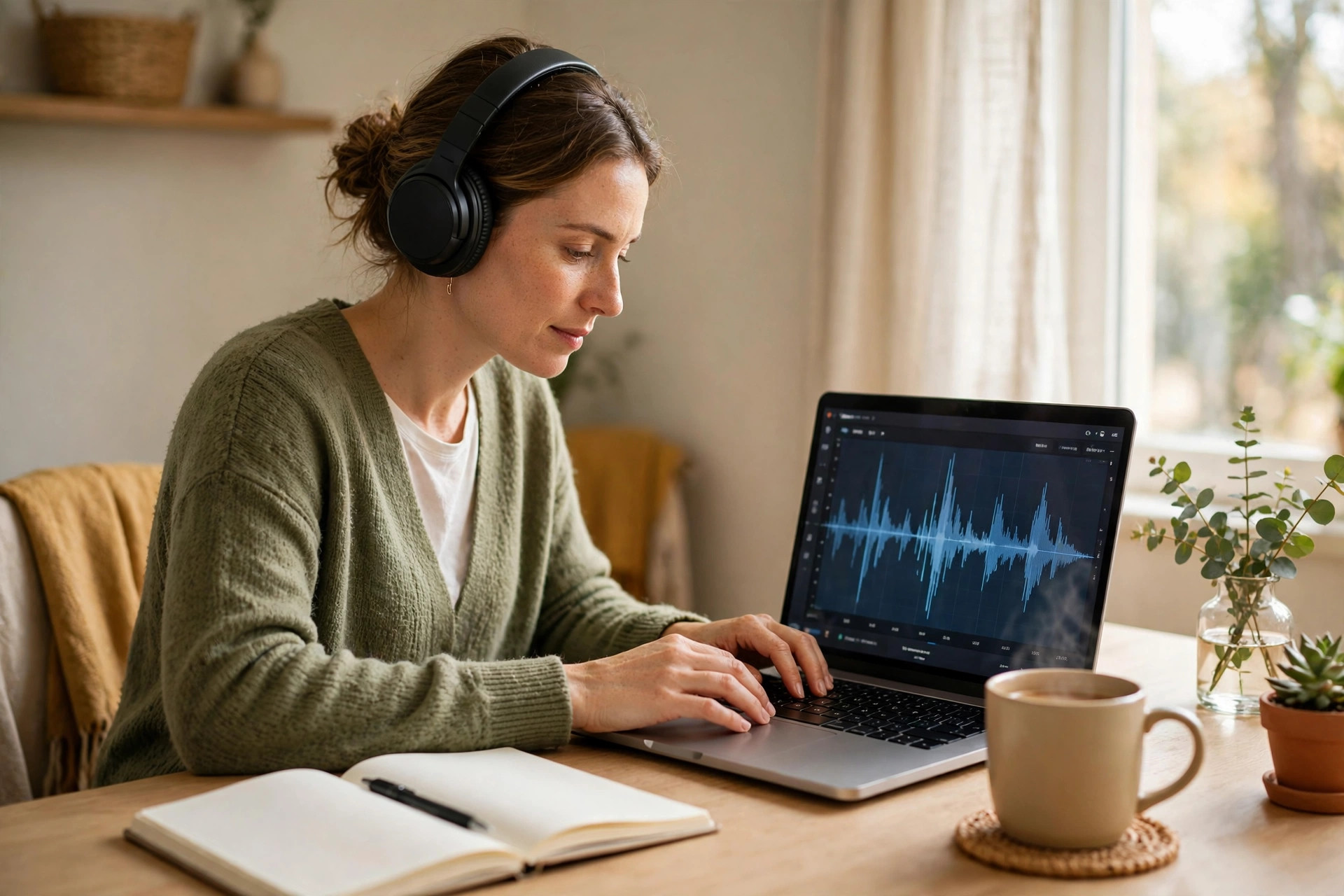
How to Make Money as a Transcriptionist Online: What the Work Actually Looks Like
A transcriptionist listens to recorded audio and types out exactly what was said, following a style guide for formatting, speaker labels, and timestamps. The main types of paid transcription work are:
1. General transcription
Podcasts, interviews, business meetings, and YouTube content. This is where beginners start — no certificate is needed, and the audio is usually clear, single-speaker or small-group conversation.
2. Legal transcription
Depositions, court hearings, and legal dictation. It pays more per audio minute, but it requires knowledge of legal terms and strict formatting, so it is a step up after you have general experience.
3. Medical transcription
Doctor dictations and clinical notes. This is the highest-paying branch, but most companies now require a certificate course (often 6 to 12 months) because the accuracy standards are unforgiving.
4. AI transcript editing
A growing type of work in 2026: AI tools like Otter.ai and Descript produce a rough draft in seconds, and humans are paid to correct, format, and polish it. It is faster than typing from scratch, but it still needs a careful ear and strong grammar.
Most beginners start with general transcription, then move into legal or medical work — or AI editing — as their speed and accuracy improve.
How to Make Money as a Transcriptionist Online: Step-by-Step Breakdown
Step 1: Test and build your typing speed
Most platforms want at least 60 to 75 words per minute with 90 percent accuracy or better. Test yourself free on sites like 10FastFingers or TypingClub. If you are below 60 WPM, spend two weeks practising before applying — speed is the single biggest factor in what you actually earn per hour.
Step 2: Set up a quiet workspace and good headphones
You need over-ear headphones (not earbuds) so you can hear mumbling, accents, and background noise clearly. A foot pedal for controlling playback costs around 20 to 30 dollars and lets you pause and rewind without taking your hands off the keyboard. Free software like Express Scribe handles playback and speed control.
Step 3: Learn the style rules before you test
Every platform has a style guide: when to write filler words verbatim, how to label speakers, how to mark inaudible audio, and how to format timestamps. Most beginners fail qualification tests on formatting, not on typing speed — so read the full guide before attempting a test.
Step 4: Apply to two or three platforms at once
Start with Rev, GoTranscript, TranscribeMe, and Scribie — the platforms most consistently open to new applicants in 2026. Each has a free grammar and transcription test, usually a short audio clip you transcribe and submit for grading. Apply to several at once, since approval rates and available work fluctuate week to week.

Step 5: Take short files first and build your rating
Your first jobs will be short, simple files. Do them carefully and on time. Platforms rank transcribers by accuracy and reliability, and a good rating unlocks better-paying files and steadier work.
Step 6: Track your real hourly rate and improve it
Transcription pays per audio minute, not per hour — so your real pay depends on how fast you finish. Time yourself: if 10 minutes of audio takes you 50 minutes to type, you know exactly what your hourly rate is, and you can see it improve as you get faster.
Step 7: Specialize to earn more
Once you are fast and accurate, move toward legal transcription or AI transcript editing, which pay more per audio minute. Medical transcription pays the most but needs a certificate, so treat it as a longer-term goal.
What Beginners Typically Earn
Pay is quoted per audio minute, which matters more than it sounds. General transcription on Rev pays roughly $0.30 to $0.65 per audio minute depending on difficulty, GoTranscript around $0.35 to $0.60, and TranscribeMe roughly $15 to $22 per audio hour. A beginner typically takes 4 to 6 hours to transcribe one hour of audio, so the effective rate in the first month or two often works out to $8 to $15 an hour. As speed improves, many transcribers reach $15 to $20 an hour by month three or four. Specialized legal work can pay $1.00 to $1.50 per audio minute. These are industry-reported figures, not a promise of what you will earn — your results depend on your typing speed, accuracy, the audio quality you accept, and how much work you take on.
Mistakes to Avoid
Applying before reading the style guide and failing the test on formatting. Accepting noisy, multi-speaker files as a beginner — they take far longer and pay the same per minute. Typing at full speed without proofreading; accuracy scores decide whether you keep getting work. Paying for a training course or certificate before you have tried free general transcription — no certificate is needed to start. Quitting after one failed test: first-attempt pass rates are low, and most rejections are fixable formatting errors.
What to Expect Realistically
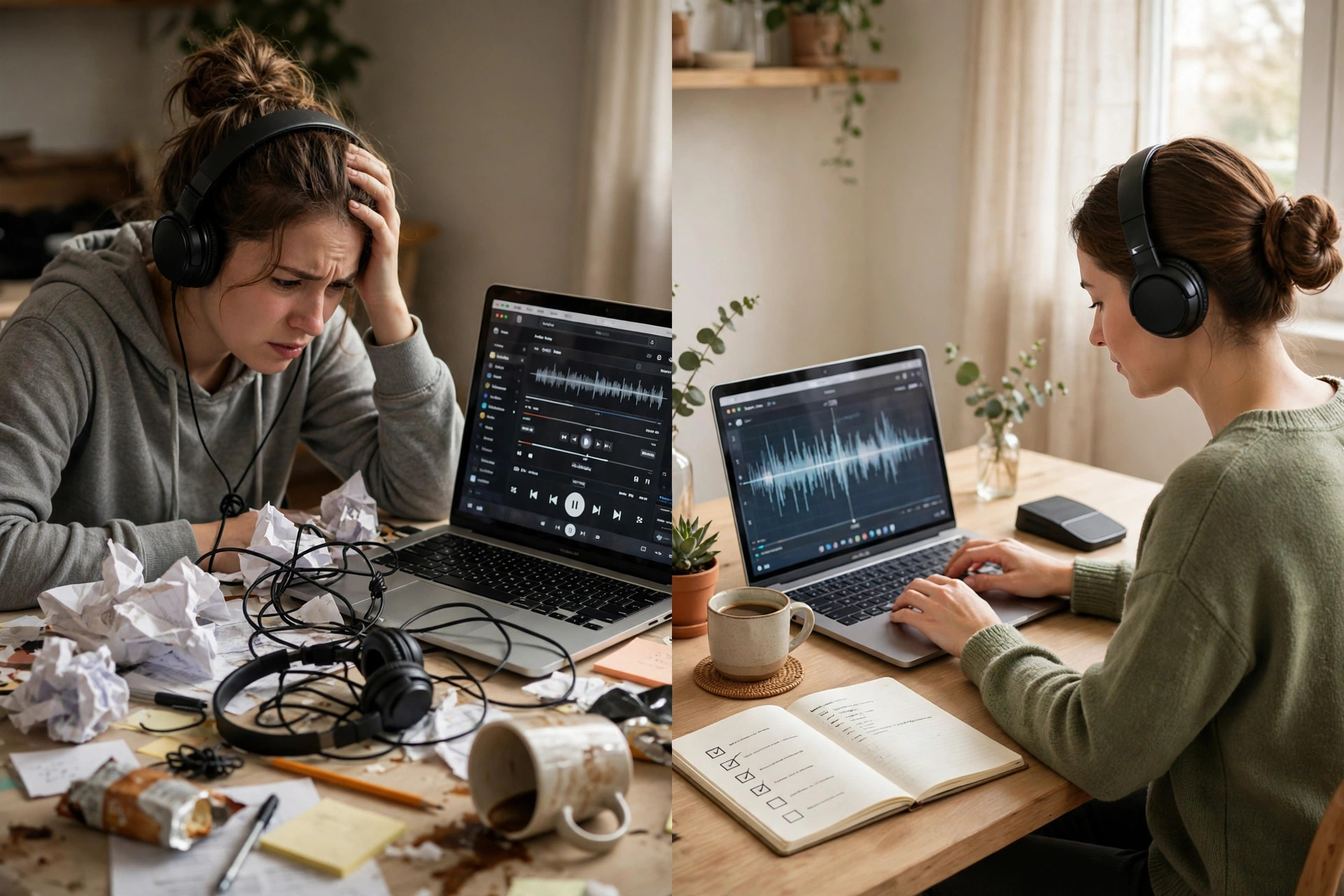
Think of transcription as a skill you build, not a quick side hustle. The first month is the hardest and least profitable stretch: you are slow, the tests are strict, and the pay per hour is modest. By month three or four, faster typing and better ratings usually lift your effective rate noticeably. AI tools are changing the work — rough drafts are now automated — but clients still pay humans to fix errors, handle messy audio, and deliver clean, correctly formatted text. Give yourself at least three months of steady practice before judging whether it works for you. Results vary with typing speed, accuracy, consistency, and the types of files you accept.
Related Guides
Good at writing as well as typing? Read our freelance writing guide for beginners for another typing-based way to earn online. Browse all our earning guides on the Online Earning hub.
FAQs
Do I need a certificate to become a transcriptionist?
No, for general transcription. You need a typing test and a style-guide test, not a certificate. Medical transcription is the exception — most companies require a certificate course there.
How fast do I need to type?
Most platforms want 60 to 75 words per minute with at least 90 percent accuracy. Below that speed, the per-audio-minute pay works out to very little per hour, so building speed first is worth the time.
How much do beginner transcriptionists make?
It varies. Beginners commonly earn $8 to $15 an hour in their first month or two, rising toward $15 to $20 an hour as speed and ratings improve. Specialized legal and medical work pays more, but needs extra training.
Is AI replacing transcription jobs?
AI now produces rough drafts quickly, but it still makes errors with accents, crosstalk, and background noise. The work is shifting toward editing and polishing AI drafts, and toward specialized legal and medical transcription, where accuracy still needs a human.
How long does it take to get your first paid job?
It varies. If your typing speed is already at 60 WPM, you can pass a platform test and take your first paid file within a week or two. If you need to build speed first, allow two to four weeks of practice before applying.
Disclaimer: This guide is for education only. Earnings depend on many factors and are never guaranteed. Pay figures mentioned are industry-reported rates from public sources and are shared for learning, not as a promise of similar results.
