
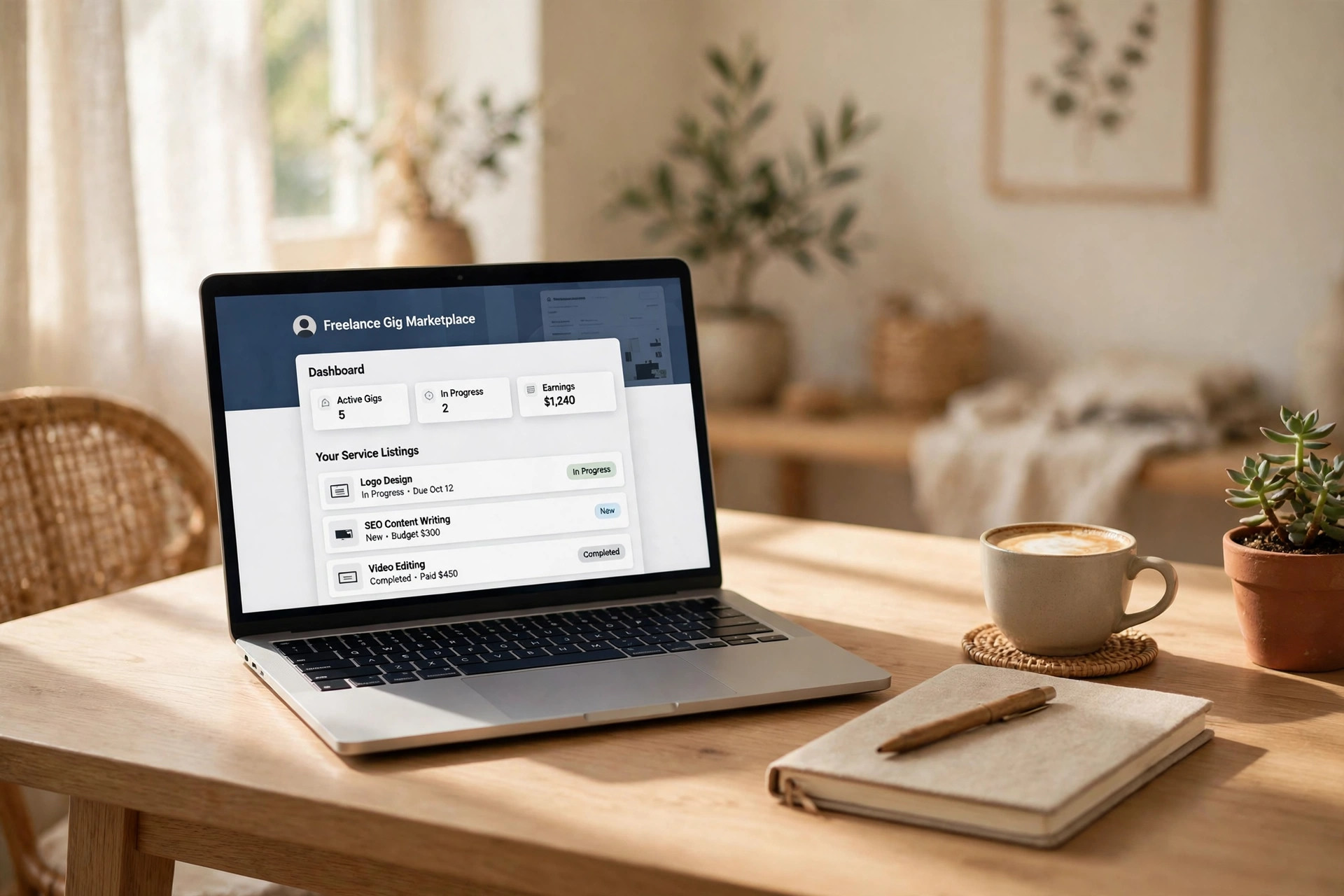
Learning how to make money on Fiverr is one of the most popular ways beginners try to earn income online — and one of the most misunderstood. Fiverr is not a job board where someone hires you by the hour. It is a marketplace where buyers search for a specific service, find your listing (called a gig), and order it at a fixed price. That difference matters, because on Fiverr you are not waiting to be hired — you are building a small product that buyers can find and buy.
This beginner's guide explains how Fiverr actually works, what sellers keep after fees, the best beginner-friendly services, a realistic step-by-step plan to get your first order, and the mistakes that keep most new sellers stuck at zero. No overnight-income claims here: Fiverr rewards a clear service, good work, and consistency, usually over weeks and months, not days.
How Fiverr Works and How Sellers Get Paid
Fiverr connects freelancers with buyers in more than 700 service categories, from graphic design and writing to programming, video editing, and digital marketing. You create a gig, a buyer orders it, you deliver the work through Fiverr, and you keep 80% of what the buyer paid. Fiverr keeps a 20% service fee on every order, including gig extras and tips. A $50 order puts $40 in your account.
The money does not arrive right away. Fiverr holds earnings in a clearing period of 14 days after an order is complete before you can withdraw them. Higher-level sellers get a shorter 7-day period. For a new seller, plan on about two weeks between finishing a job and having the cash in hand.
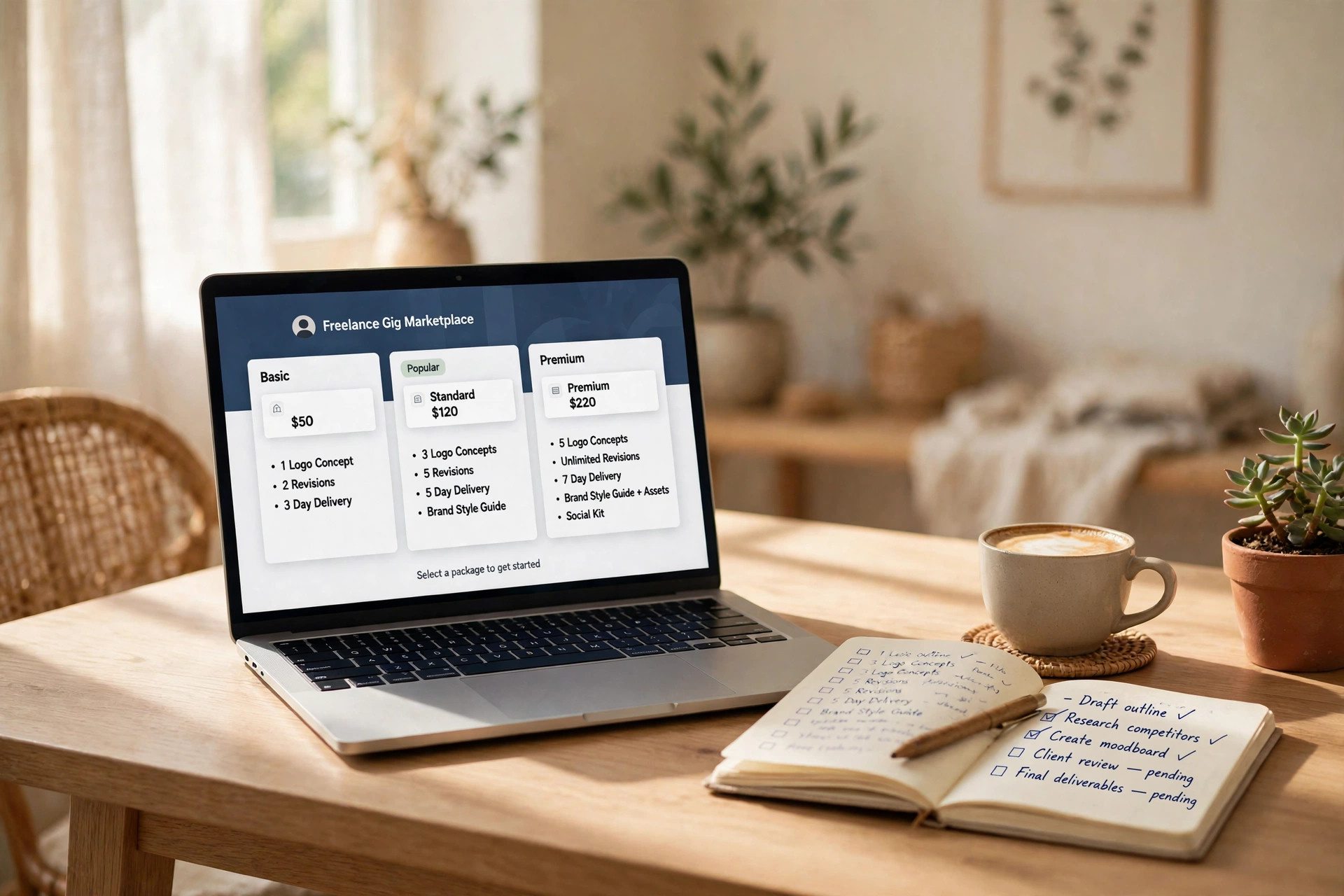
Each gig can have up to three packages — Basic, Standard, and Premium — and packages start at $5, although some categories set a higher minimum. New sellers can publish up to four active gigs, so it pays to spend them on one service you can deliver well rather than four vague variations of "I can do anything."
Best Fiverr Services for Beginners
The best service is one you already know how to deliver. Beginners often do well in categories where the work is a clear, finished file rather than an open-ended project:
1. Writing and editing
Blog posts, newsletters, product descriptions, and proofreading. If you can write clearly, this is one of the easiest services to start, and it pairs well with the skills in our guide to freelance writing for beginners.
2. Graphic design
Logos, social media graphics, thumbnails, and simple branding work. Canva-based design is a common entry point, but your samples must look polished — buyers judge your gig by its images within seconds.
3. Short-form video editing
Editing reels, shorts, and TikTok clips is in high demand as every brand wants short video. A few strong before-and-after samples matter more than a long list of services.
4. Virtual assistant work
Admin support such as scheduling, email handling, data entry, and research. According to Fiverr's 2026 data, virtual assistants on the platform typically charge between $47 and $60 per hour, with fixed-price projects ranging from $28 to $91.
5. Voiceover and audio
If you have a clear voice and a quiet room, voiceover for videos, ads, and audiobooks is a service you can deliver from home with minimal equipment. Average rates for voice-over artists are around $38 per hour.
Avoid starting with services a chatbot can do in a minute, such as a basic logo or a short generic product description. Buyers have little reason to pay for those, and competition there is brutal.
Step-by-Step Breakdown: How to Make Money on Fiverr
Step 1: Pick one specific service
Choose a single service you can deliver well and describe it in one sentence: a clear buyer, a clear deliverable, and a clear boundary. "I will write SEO blog posts for SaaS websites" beats "I will help your business grow online," because real buyers type the specific phrase into Fiverr's search bar.
Step 2: Research what buyers actually search for
Type your service into Fiverr's search box and read the autocomplete suggestions — those are real buyer search phrases. Look at how top gigs phrase the service, what their packages include, and what samples buyers expect. Do not copy another seller's gig; use the market to understand the search intent.
Step 3: Set up your profile and verify your identity
Create a free account, write a short profile that explains who you help and what you deliver, and complete identity verification when Fiverr asks — usually with a government ID. Fiverr states you have 14 days to complete verification once notified, or your ability to sell is removed.
Step 4: Build your first gig properly
Use the exact phrase buyers search for in your gig title, write a description that explains exactly what the buyer gets, add up to five search tags, and include a short gig video if you can — gigs with videos get significantly more orders. Add real samples of your work, even if they are practice projects made for your portfolio.
Step 5: Price for value, not for the bottom
Start with a fair entry price to earn your first reviews, but do not race to $5 forever. Use the three packages to offer a simple basic option and better-priced standard and premium options. Cheap entry gigs work best as a fast way to earn your first reviews, not as a long-term income plan.
Step 6: Respond fast and deliver on time
Fiverr measures the percentage of first replies sent within 24 hours. Fast, clear communication and on-time delivery are the two fastest ways to earn five-star reviews, and those reviews decide whether Fiverr keeps showing your gig to buyers.
Step 7: Track your funnel and improve
Your Fiverr analytics show a simple funnel: impressions, clicks, views, orders, earnings. If impressions are low, your title and tags need work. If clicks are low, your gig image needs work. If orders are low, your samples and pricing need work. Give keyword changes about 30 days before judging them.
What Sellers Actually Earn: A Realistic Look
Fiverr reported 2.7 million annual active buyers in its second-quarter 2026 results, so demand exists — but so does competition, with millions of sellers on the platform. New sellers in a reasonably chosen niche can realistically reach $1,000 to $5,000 per month within their first year, according to recent seller guides, but those are ranges for consistent sellers, not a promise and not this blog's earnings. Entry-level gigs at $5 to $10 per order rarely scale into a full income on their own; they work best as a fast way to build your first reviews and reach Level 1.
The math is simple: at 80% of each order, ten $50 orders a month put $400 in your account before withdrawal. Reaching that level takes a clear service, strong samples, fast replies, and enough visibility to earn your first few orders — usually over the first two to three months, not the first week.
Mistakes to Avoid When You Make Money on Fiverr
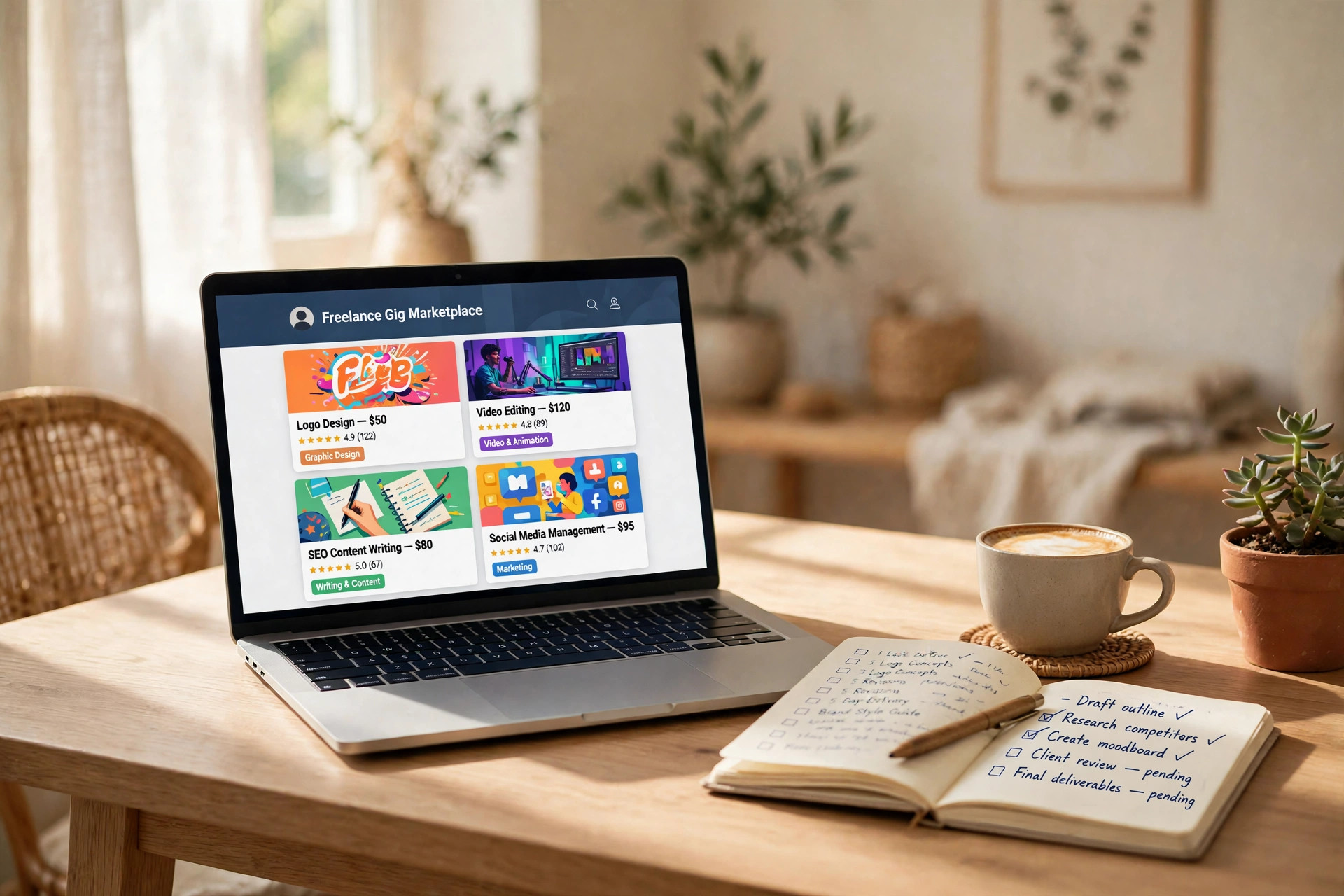
Creating four vague gigs instead of one clear service. Competing only on the lowest price. Using a clever, vague gig title instead of the exact phrase buyers search for. Taking payment outside Fiverr or moving a client to WhatsApp or Discord — Fiverr's off-platform policy bans this and accounts that do it risk suspension. Ignoring buyer messages for days. Delivering late or delivering work that does not match the gig description. And quitting after two weeks because the first gig has no orders yet.
What to Expect Realistically
Think of Fiverr as a slow-building storefront, not a quick side hustle. Most new sellers get their first impressions within days, their first order within a few weeks, and meaningful income only after several months of consistent gig optimization and good reviews. Your first two weeks matter more than most beginners realize: Fiverr weighs early click-through and conversion rates heavily when deciding how much visibility a new gig gets. Results vary with niche, service quality, response time, and review quality.
FAQs
Can a beginner really make money on Fiverr?
Yes, but there is no guarantee. A beginner needs a clear service, strong proof of work, good communication, and enough visibility to earn the first few orders. Most sellers who succeed treat the first months as building a reputation, not as a paycheck.
How much does Fiverr take from sellers?
Fiverr keeps 20% of every order, including gig extras and tips. You keep 80%. Buyers pay a separate service fee on top of the price, which does not come out of your share.
How long does it take to get your first order on Fiverr?
It varies. Some sellers get impressions within 24 to 48 hours, while others wait two to four weeks for a first order. A clear gig title, strong samples, and fast replies help, but there is no fixed timeline.
Do I need money to start selling on Fiverr?
Opening an account and publishing gigs costs nothing. You may need a small investment in tools or samples for your service, but start lean and spend more only when orders start coming in.
Is Fiverr still worth it for beginners in 2026?
Yes, for services buyers actively search for and that you can genuinely deliver well. The old "create a $5 gig and wait" strategy is outdated — Fiverr now weighs your Success Score, ratings, response rate, and gig conversion rate. Sellers who treat it as a real storefront still have room to grow. For a full overview of the earning methods in this category, visit our Online Earning hub.
Disclaimer: This guide is for education only. Earnings depend on many factors and are never guaranteed. Any figures mentioned are the original sources' reported results, shared for learning, not as a promise of similar results.
