
Every small business needs someone to keep its books in order, and most owners would rather pay someone else to do it than touch a spreadsheet themselves. That is exactly why learning how to make money as a bookkeeper online is one of the most realistic ways to start earning from home. You do not need an accounting degree or a CPA license to begin — you need solid basic skills, free software certification, and a few clients willing to give you a chance.
This guide explains what online bookkeepers actually do, the step-by-step path beginners follow, what you can realistically expect to earn, and the mistakes that slow most newcomers down. No overnight-income promises here: bookkeeping rewards accuracy and consistency, and income grows as your client list grows.
What Does an Online Bookkeeper Actually Do?
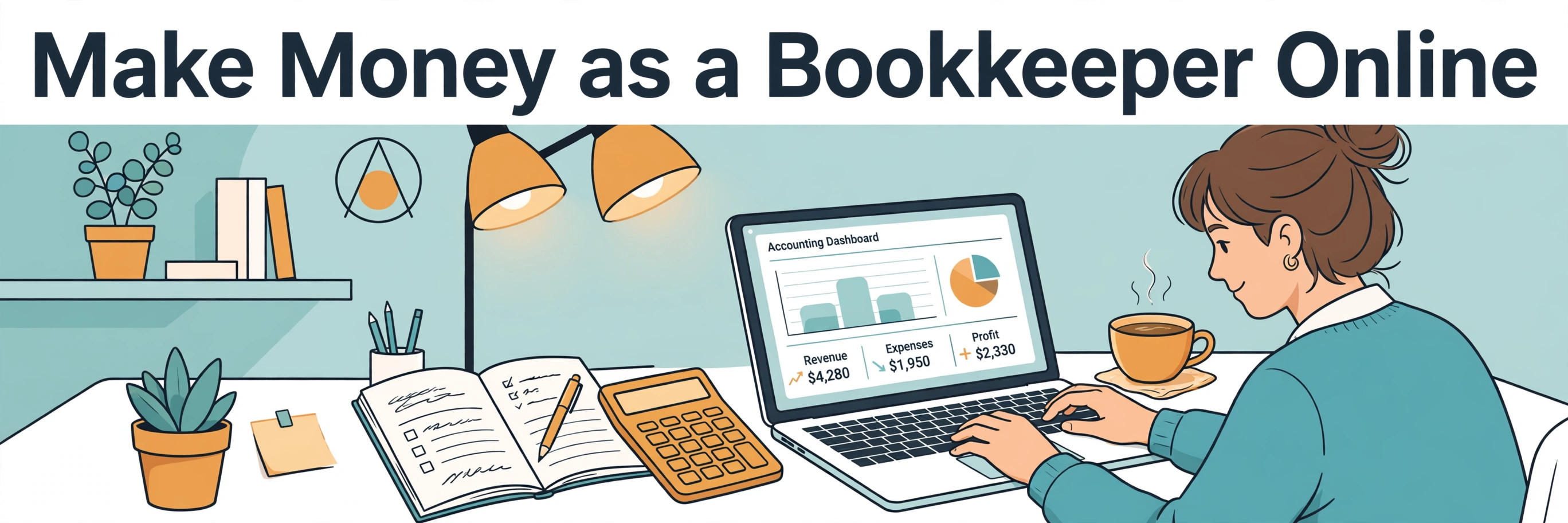
An online bookkeeper records a business's day-to-day financial activity and keeps its accounts tidy so the owner — and their tax preparer — always knows where the money stands. Typical tasks include categorizing bank and credit card transactions, reconciling accounts each month, sending invoices and tracking who has paid, managing basic payroll, and preparing simple monthly reports like a profit and loss statement.
Most of the work happens inside cloud software such as QuickBooks Online or Xero, which automatically pull in bank feeds and suggest categories. Your real value is not typing numbers — it is checking that everything is categorized correctly, spotting errors, and giving the owner clean, trustworthy books.
How to Make Money as a Bookkeeper Online: Step-by-Step
Step 1: Learn the bookkeeping basics
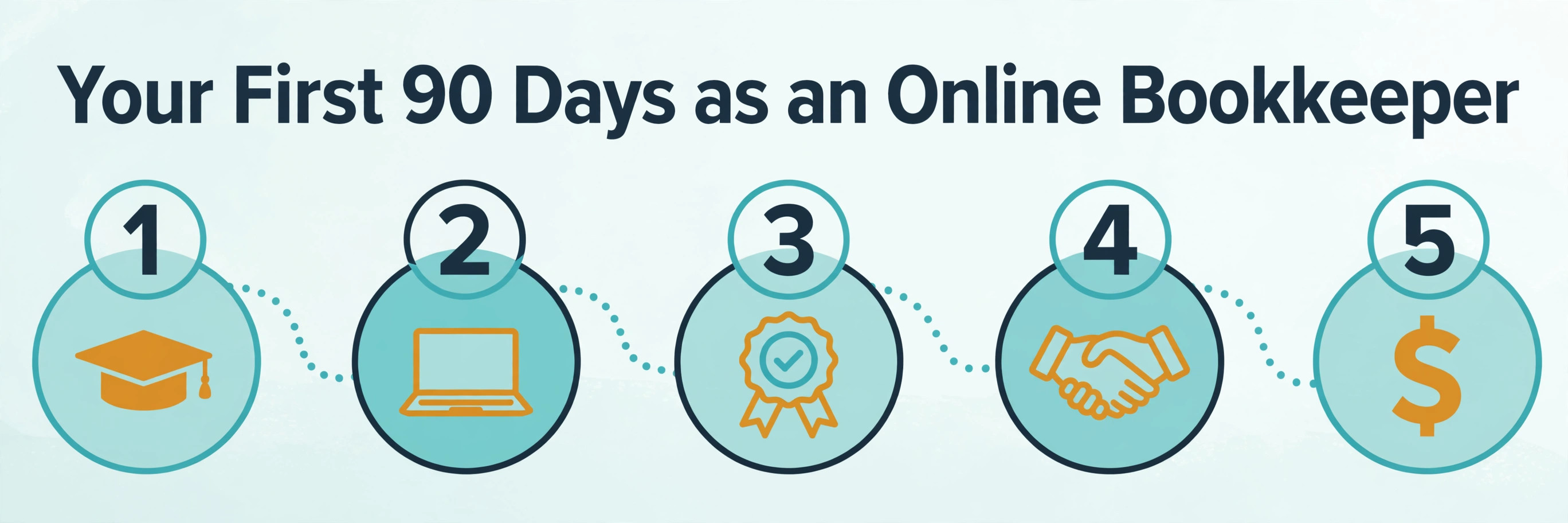
Before taking a paying client, learn the fundamentals: how debits and credits work, how to read a balance sheet and a profit and loss statement, and how bank reconciliation works. Free resources are enough to start — QuickBooks and Xero both publish free training, and beginner courses on YouTube and Coursera cover the same ground. Most people need 30 to 60 hours of focused study to feel confident.
Step 2: Get certified for free in QuickBooks Online
The QuickBooks Online ProAdvisor certification is free through Intuit's accountant portal and is the most recognized credential for entry-level bookkeepers in the US. It usually takes 15 to 25 hours of self-paced study and gives you a badge you can show on LinkedIn and freelance profiles. Xero's Advisor certification is also free and worth adding, since many small businesses run on Xero.
Step 3: Build proof with one or two practice clients
Trust is the bottleneck when you have no track record. Offer to reconcile three months of real transactions for a friend's small business, a local shop, or a side hustle — free or at a low rate — in exchange for a written testimonial and permission to describe the work on your profile. One real testimonial and one worked example you can talk through is worth more than any course certificate.
Step 4: Set your first rates
New US freelance bookkeepers typically charge $25 to $40 per hour, or $200 to $500 per month per small client on a flat retainer. Retainers are better for stable income: a handful of clients paying monthly beats chasing one-off hourly jobs. Start at the lower end for your first three clients, then raise your rates as testimonials and experience stack up.
Step 5: Find your first clients
Start where trust already exists: your own network, local small businesses, and the QuickBooks ProAdvisor directory. Freelance platforms such as Upwork also list bookkeeping jobs — our guide to starting freelancing on Upwork covers how to write a profile and win a first job. Posting short, practical bookkeeping tips on LinkedIn also works surprisingly well, because it shows business owners you know the mechanics, not just the theory.
Step 6: Specialize to raise your rates
General bookkeeping pays the bills, but niches pay more. Bookkeepers who specialize in e-commerce, real estate, construction, or medical practices commonly charge $60 to $100 or more per hour. Pick one niche after your first few clients and learn its specific needs — for example, inventory accounting for online sellers or job costing for contractors.
What Online Bookkeepers Earn in 2026
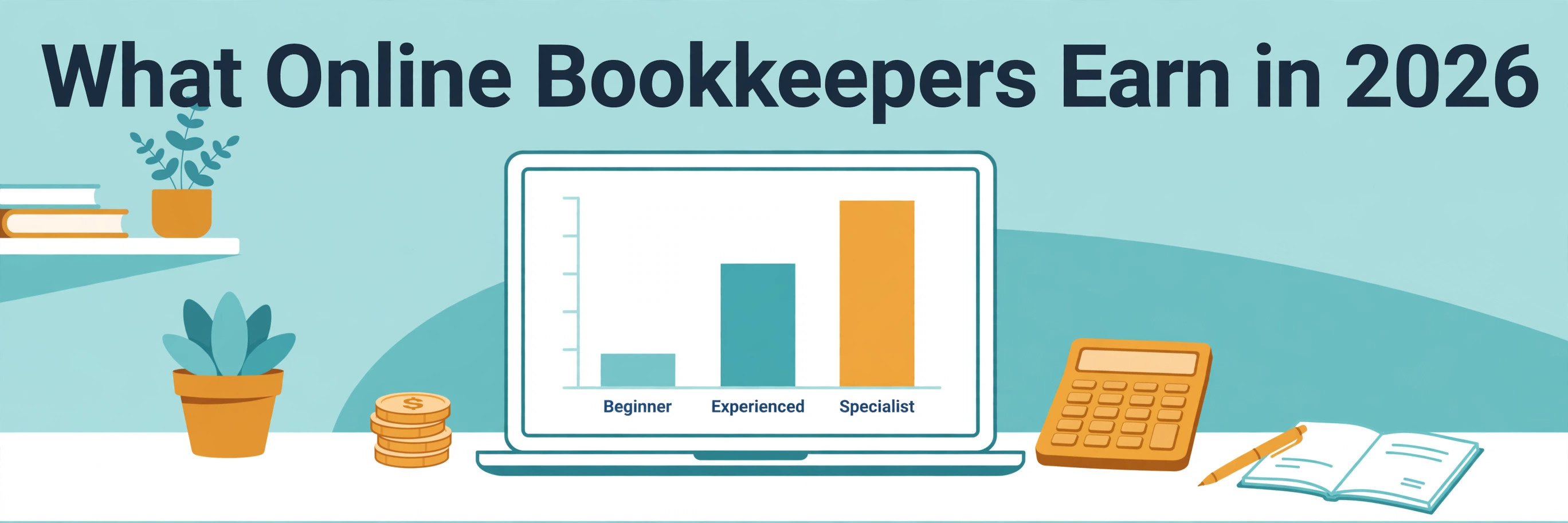
Rates vary by experience, location, and niche, but published 2026 guides point to a consistent picture. Entry-level US freelance bookkeepers charge roughly $20 to $35 per hour, mid-level certified bookkeepers $35 to $60, and specialists $60 to $100 or more. On monthly retainers, a small business typically pays $300 to $800 per month, while larger or more complex clients pay $700 to $1,500.
The US Bureau of Labor Statistics puts the median wage for bookkeeping, accounting, and auditing clerks at about $50,670 per year in its May 2025 release. Freelancers who build their own client base can earn more — but only after months of consistent work. A realistic path looks like $500 to $2,000 per month in the first six months, $2,000 to $5,000 per month by month 12 to 18, and $5,000 or more per month once you hold 10 to 15 retainer clients. These are typical ranges reported across 2026 freelance guides, not a promise — your results depend on your niche, rates, and how consistently you find clients.
Mistakes to Avoid When You Make Money as a Bookkeeper Online
Paying $2,000 for a generic bookkeeping course before taking the free QuickBooks certification. Taking on clients before you can reconcile a bank account cleanly — one messy month of books can cost you a testimonial. Charging hourly forever instead of moving to monthly retainers, which are steadier and easier to scale. Mixing client money questions with tax advice you are not qualified to give — bookkeeping is not tax preparation, and you should never present it as such. Underpricing for too long: raise rates for new clients every six months as your experience grows. And forgetting self-employment tax — set aside roughly 30% of your income for taxes from the start.
What to Expect Realistically
Bookkeeping is steadier than most online income paths, because clients pay monthly and rarely leave a bookkeeper who keeps clean books — published guides report client retention above 90%. But it is still a slow build. Expect your first client to take weeks, not days, and your first $1,000 month to take a few months. Startup costs are low — $0 to $300 before your first client, plus errors-and-omissions insurance of a few hundred dollars a year once you are working. If you want stable, repeatable income from home and you are comfortable with detail work, it is one of the most dependable online earning routes for beginners.
FAQs
Do I need a degree or CPA license to become an online bookkeeper?
No. In the United States, no license is required to offer bookkeeping services, and most bookkeeping roles require only a high school diploma plus training. Free QuickBooks ProAdvisor certification is the practical credential most beginners start with.
How long does it take to start earning as an online bookkeeper?
Plan on 2 to 4 weeks to learn the basics and get certified, then a few more weeks to land a first practice or paying client. Most beginners see their first real income within 1 to 3 months.
How much can a beginner bookkeeper charge?
Beginners in the US typically charge $25 to $40 per hour or $200 to $500 per month per small client. Rates rise with experience, certification, and specialization.
Is QuickBooks or Xero better to learn first?
QuickBooks Online is the most widely used small business accounting software in the US, so learn it first. Xero is a strong second choice and is popular with many small businesses too.
Can I do bookkeeping part-time alongside a job?
Yes. Many bookkeepers start with 2 to 5 small clients at 5 to 10 hours a week and grow from there. Monthly retainers make part-time work predictable, since the same clients pay every month.
Want more beginner-friendly ways to earn online? Browse the full collection on our Online Earning page.
Disclaimer: This guide is for education only. Earnings depend on experience, niche, rates, and consistency, and are never guaranteed. Rate ranges mentioned come from published 2026 freelance guides and the US Bureau of Labor Statistics, shared for learning, not as a promise of similar results.
