
If you have a camera and a growing folder of good shots, learning how to sell photos online can turn a hobby into a real side income. Stock photo agencies, print marketplaces, and your own store let photographers earn royalties every time someone licenses or buys their work — and you keep the copyright while the platform handles the selling.
This beginner guide explains how to sell photos online, which platforms are worth your time, what actually sells, and what to expect in your first year. No overnight-income promises here: stock photography is a slow-build income stream that rewards a large, well-keyworded portfolio over time.
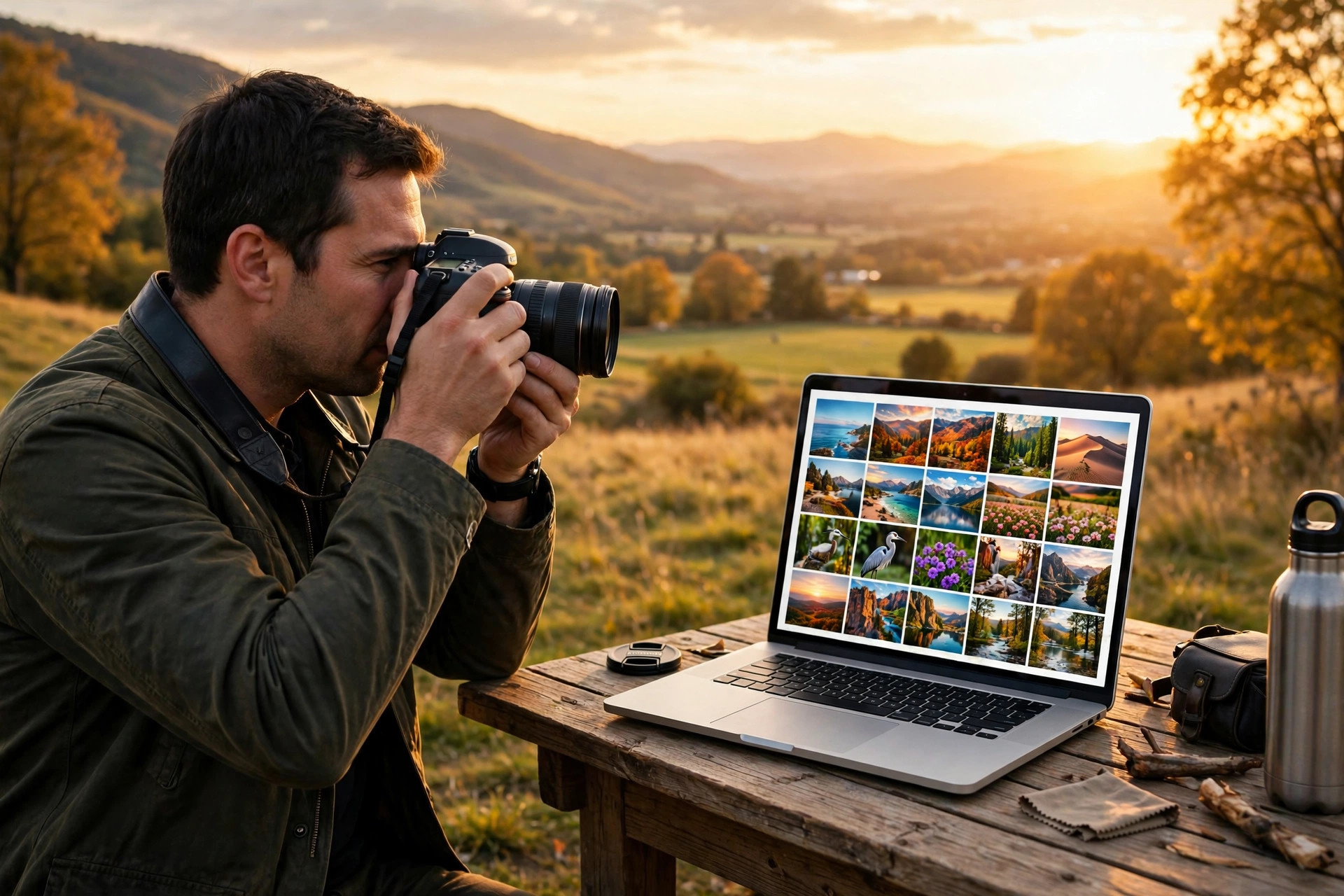
How Selling Photos Online Actually Works
When you sell photos online through a stock agency, you are not selling the photo itself. You are licensing it: a business, designer, or publisher pays for permission to use your image, and the agency pays you a royalty for each license sold. You keep the copyright, and the same photo can earn again and again.
There are three main routes for beginners:
1. Stock photography marketplaces
Agencies such as Shutterstock, Adobe Stock, Getty Images, and Alamy host millions of images for buyers. You upload your photos, add titles and keywords, and earn a royalty — typically a percentage of each sale, often in the 15% to 60% range depending on the platform and license type. Joining is free on most major agencies, and this is the most common starting point because the buyers are already there.
2. Print and art marketplaces
Sites like Fine Art America and Etsy let you sell your photos as physical prints, canvases, and other products. The service handles printing and shipping, and you earn a margin on each order. This route suits photographers whose work people want on their walls.
3. Your own website or store
Selling directly from your own site gives you the most control over pricing and the highest margin per sale, but you must bring your own traffic. Most photographers start with stock agencies and add their own store later, once they have an audience. If you already sell digital products, the same idea applies — see our guide on how to sell digital products on Etsy for a related way to earn from files you create once.
Step-by-Step Breakdown for Beginners
Step 1: Audit the photos you already have
Look through your existing library first. Travel, food, lifestyle, business, and everyday-life photos often sell better than artistic one-offs, because buyers search for images that illustrate real topics. Pick your 20 to 50 strongest, sharpest, most varied images to start.
Step 2: Learn what buyers actually search for
Stock buyers are usually marketers, bloggers, and designers looking for specific concepts: a happy family cooking dinner, a modern office meeting, a mountain trail at sunrise. Photos with clear subjects, good light, and space for text tend to get licensed more often than busy or overly artistic shots.
Step 3: Prepare your files properly
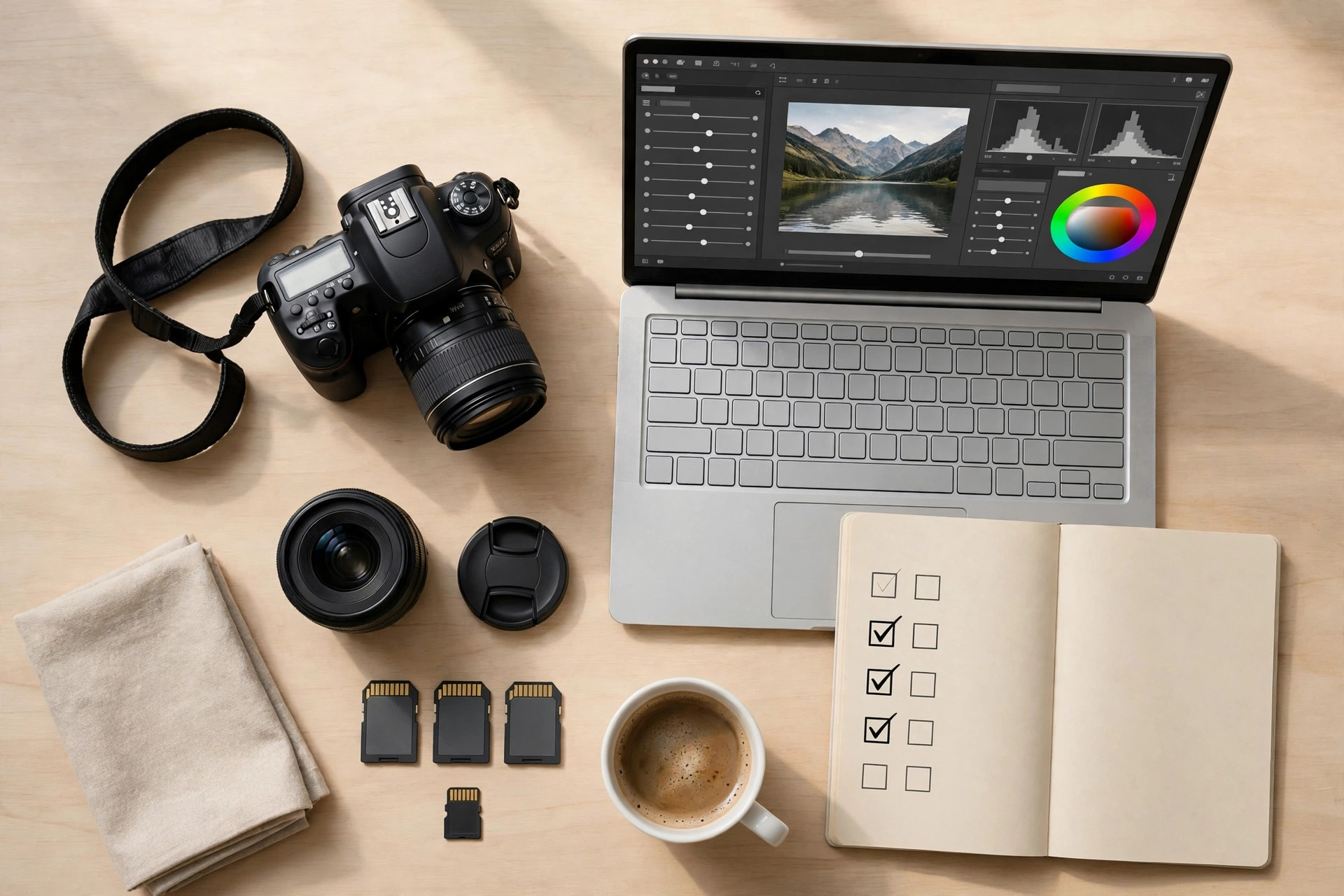
Export clean, high-resolution JPEGs, remove noise, correct exposure and color, and straighten horizons. Agencies reject blurry, noisy, or poorly exposed files, so only submit your best work. Never submit AI-generated images without checking the agency's disclosure rules — undisclosed synthetic uploads can get your account banned.
Step 4: Get model and property releases
A photo with a recognizable person or a distinctive private building cannot be sold for commercial use without a signed model or property release. Most agencies provide free release forms. If you cannot get a release, submit the image for editorial use only, where allowed.
Step 5: Open contributor accounts on two or three agencies
Start with Shutterstock and Adobe Stock, then add one more such as Alamy or Dreamstime. Most agencies are non-exclusive, so you can sell the same images on several platforms. Check each site's current contributor terms before committing, because royalty rates change over time.
Step 6: Keyword every photo like your income depends on it — because it does
On a stock site, your photos are invisible without strong keywords, titles, and descriptions. Add accurate, specific keywords covering the subject, the setting, the mood, and the concept. Think about what a buyer would type into the search box, not what you would call the photo.
Step 7: Upload consistently and let time do the work
Upload in small batches every week if you can. A portfolio of a few hundred well-keyworded images earns far more than a dozen uploads that sit forgotten. Review your download reports monthly, and shoot more of whatever is actually selling.
Case Study: What Real Stock Photography Earnings Look Like
A detailed contributor review from GottaPics, a photography site whose author shares real account figures, shows what patient stock photography actually pays. On Shutterstock, the author reported 4,484 images online, 964 licensed downloads, and $468.75 in lifetime earnings as of September 2026. On Dreamstime, the same author reported 3,001 files online and $234.67 in total revenue since opening the account in 2013.
Those are the case study author's own reported figures — not a promise and not this blog's earnings. The lesson is honest and useful: stock income builds slowly, it takes hundreds of quality images to see meaningful money, and each photo keeps working for years after you upload it. Results vary with portfolio size, image quality, keywording, and consistency.

Mistakes to Avoid
Uploading a handful of photos and expecting quick money. Skipping keywords or using vague, one-word tags. Submitting blurry, noisy, or poorly edited files that get rejected. Uploading photos of recognizable people without a model release. Submitting AI-generated images without disclosure. Quitting after a month because the first payout was small.
What to Expect Realistically
Think of stock photography as a marathon, not a sprint. Casual contributors with small portfolios often earn only a few dollars a month at first, while larger portfolios built over years can bring in steady passive income. Most contributors see meaningful earnings only after months of consistent uploading. Your first sale may take weeks, and that is normal. The goal is a growing library of useful, well-keyworded images that keeps earning over time. Results vary with niche, quality, consistency, and timing — nothing here is guaranteed income.
FAQs
Can I sell photos online for free?
Yes — joining the major stock agencies is free, and you can start with photos you already own and free editing tools. Your costs are your time, your camera or phone, and possibly a model-release workflow. A blog or personal store has small hosting costs, but stock agencies cost nothing to join.
How much money can I make selling photos online?
It varies enormously. Casual contributors with small portfolios may earn a few dollars a month, while experienced contributors with thousands of images can earn hundreds per month. Treat it as a long-term additional income channel, not a shortcut to quick money.
Do I need a professional camera to sell stock photos?
Not necessarily. Modern smartphones can produce acceptable stock images in good light, but a camera with a larger sensor gives you more control and better low-light quality. Agencies judge the file, not the device — sharp, clean, well-exposed images pass review regardless of what shot them.
Which stock photo site is best for beginners?
Shutterstock and Adobe Stock are the most common starting points because of their large buyer bases and straightforward review processes. Alamy is known for contributor-friendly royalty terms, and Dreamstime is a solid additional outlet. Try two or three and focus on the ones where your style sells.
Can I sell the same photo on multiple stock sites?
Yes, if the agency is non-exclusive — and most major agencies are. You can upload the same image to Shutterstock, Adobe Stock, and Alamy at the same time. Only avoid this if you have signed an exclusive agreement with one agency, which usually pays a higher royalty in exchange.
Is selling photos online still worth it in 2026?
Yes, for photographers willing to build a portfolio over time. Generative AI has flooded stock libraries with synthetic images, and most major agencies now restrict or label AI submissions — which makes authentic, real photography more valuable, not less. Real people, real places, and real moments remain in demand.
Want more beginner-friendly ways to earn online? Browse the full Online Earning hub for step-by-step guides on freelancing, blogging, Pinterest, Etsy, and more.
Disclaimer: This guide is for education only. Earnings depend on many factors and are never guaranteed. Any case-study figures mentioned are the original author's reported results, shared for learning, not as a promise of similar results. Always check each platform's current contributor terms before uploading.
