
Learning how to make money on Pinterest starts with one honest fact: Pinterest does not pay you per view the way YouTube does. Its real power is traffic. People come to Pinterest to plan, save ideas, and buy things, and when a pin sends them to your website, blog, or store, that visit can turn into income through ads, affiliate commissions, or product sales.
This guide explains five beginner-friendly ways to earn with Pinterest, how each one works, and the mistakes that slow most beginners down.
Can You Really Get Paid to Pin?
Yes, but not directly by Pinterest itself. You get paid by what your traffic does after the click. A pin that links to a helpful blog post can earn ad revenue. A pin that links to a product you recommend can earn a commission. A pin that links to your own shop can earn a sale. That is why the strongest Pinterest earners do not chase viral pins for their own sake. They build useful content behind the pin.
Results take time. Most new accounts need weeks of consistent pinning before traffic becomes steady, and income depends on your niche, your content quality, and how well your offer matches what people were searching for.
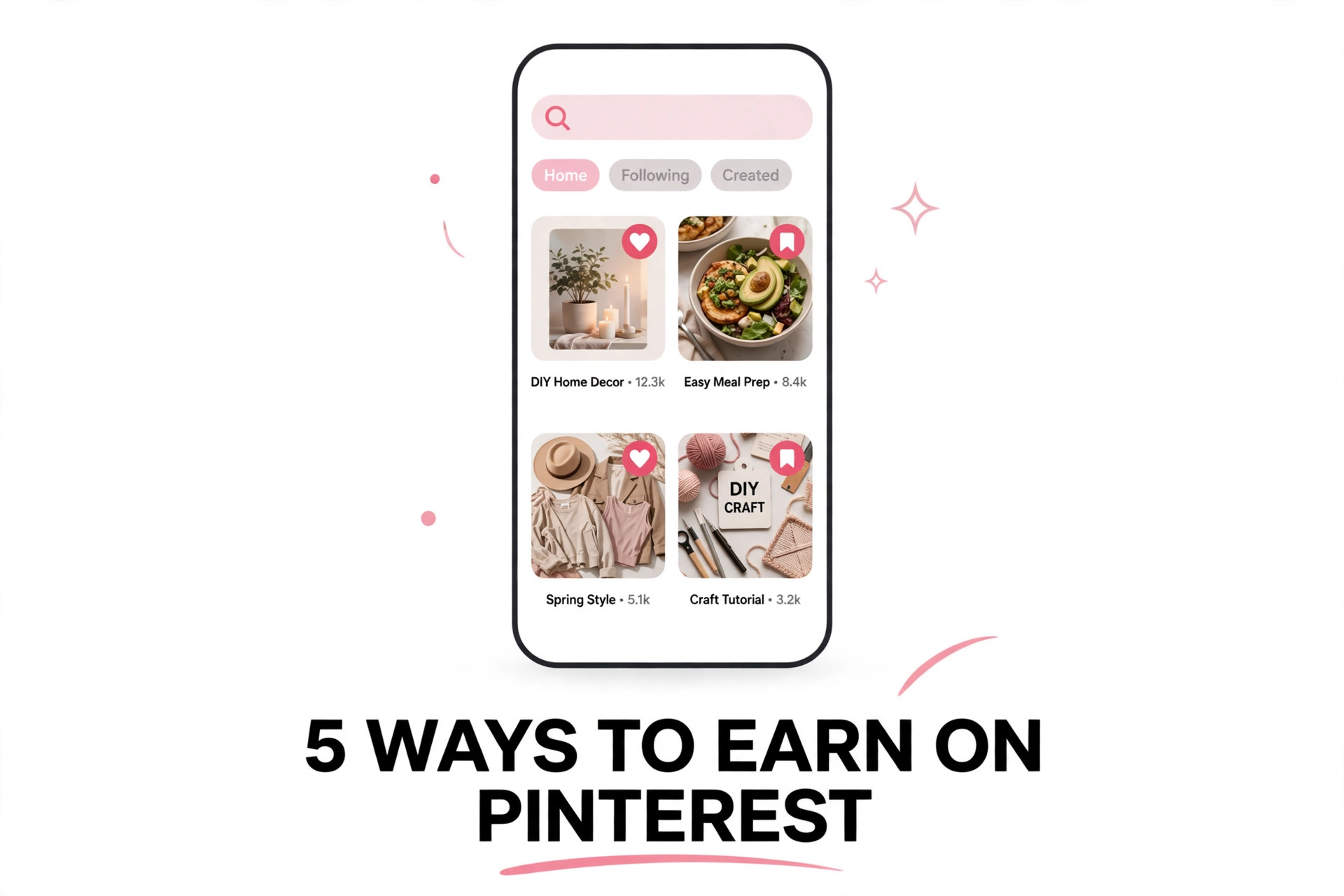
5 Ways to Make Money on Pinterest
1. Affiliate Marketing
With affiliate marketing, you recommend products you genuinely use or trust and earn a commission when someone buys through your link. The safest route for beginners is to write a short blog post that compares or explains a product, then pin that post. Direct affiliate links on pins can work on some programs, but a blog post gives readers context, builds trust, and usually converts better. Always disclose affiliate links clearly.
For a full beginner walkthrough, see our guide on how to start affiliate marketing as a beginner.
2. Blogging
Blogging and Pinterest are a natural pair. You publish helpful articles, then create several fresh pins for each one, each with a different headline or image. When readers click through, your blog can earn from display ads, affiliate offers, or your own products. The key is to pick one niche, answer real search questions, and keep your pins honest about what the article delivers.
3. Digital Products
Digital products, such as templates, planners, printables, ebooks, and short courses, suit Pinterest well because buyers are already in planning mode. You create the product once, list it on a shop platform, and use pins to send interested people to the listing. Start with one simple product that solves one clear problem, rather than a large catalogue nobody asked for.
4. Pinterest Management
Once you understand how Pinterest works, you can offer that skill as a service. Small businesses often want regular pinning, board organisation, and fresh pin designs, but do not have time to do it themselves. Pinterest managers are usually paid monthly. This route needs proof of your own results first, even if that proof is just a well-run personal account with steady growth.
5. E-commerce
If you sell physical products, Pinterest can send buyers straight to your store. Product pins, lifestyle images, and gift guides work best when they show the product in real use. Make sure your store loads fast, your prices are clear, and your pin links go to the exact product, not just your homepage.
How to Start as a Beginner
- Choose a profitable niche. Pick a topic you can write about for months, with products or problems people already spend money on.
- Create a Pinterest business account. It gives you analytics, so you can see which pins actually bring clicks.
- Design eye-catching pins. Use large, readable text, one clear idea per pin, and a vertical image.
- Publish consistently. A few fresh pins every week beats a burst of fifty pins followed by silence.
- Drive traffic to valuable content. Every pin should lead somewhere genuinely useful, not a thin page built only to hold ads.
Common Pinterest Mistakes to Avoid
Only pinning your own content. Pinterest rewards accounts that curate useful ideas, not just self-promotion. Mix in relevant pins from others.
Clickbait headlines. A pin that promises one thing and delivers another gets clicks once, then loses trust and saves.
No keyword strategy. Pinterest is a search engine. Put the words people actually search for in your pin titles, descriptions, and board names.
Giving up too early. Pinterest traffic often builds slowly, then compounds as older pins keep getting found. Judge a strategy after a few months, not a few days.
Realistic Expectations
Pinterest income is rarely fast. Beginners should expect to spend the first month learning, publishing, and improving pins, with traffic and income growing gradually after that. There is no guaranteed amount, and anyone promising instant earnings from pinning alone should be treated with caution.
Frequently Asked Questions
Do I need a blog to make money on Pinterest?
No, but it helps a lot. A blog gives you a place to earn from ads and affiliate links and to sell your own products. Without one, you are limited to direct product links and services.
How many pins should a beginner post?
Consistency matters more than volume. Start with a few high-quality fresh pins per week, and increase only when you can keep the quality up.
Is Pinterest still worth starting in 2026?
Yes, for niches where people plan purchases and projects, such as home, food, fashion, beauty, and money topics. It works best as one traffic channel alongside search and email, not as your only channel.
For more beginner guides, visit our Online Earning page.
Disclaimer: Results vary and income is never guaranteed. This guide is for education only and is not financial advice.
