
Affiliate marketing is one of the most popular ways beginners start earning online, and the reason is simple: you do not need to create a product, hold stock, or handle customer service. You recommend products or services you genuinely like, and when someone buys through your unique link, you earn a commission.
This guide explains how affiliate marketing actually works, gives you a realistic step-by-step plan, and covers the mistakes that slow most beginners down. There are no income guarantees here — results depend on your niche, content quality, and consistency over months, not days.
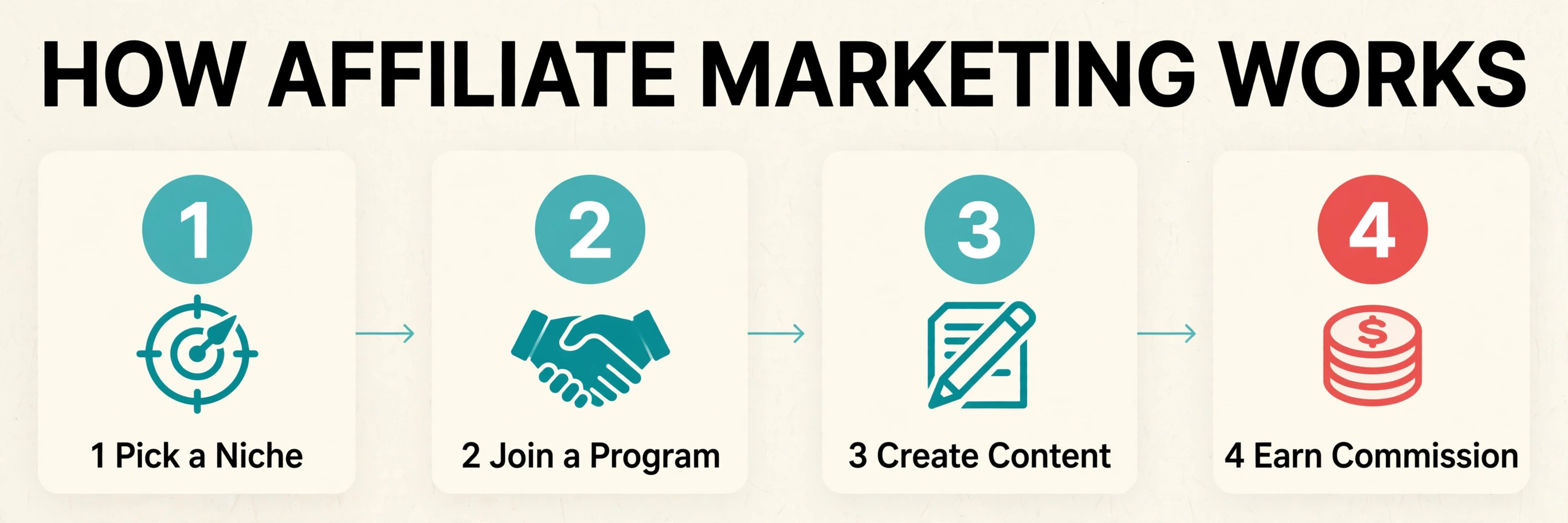
How Affiliate Marketing Works
The model has four players: the merchant who sells the product, the affiliate network or program that tracks sales, you as the affiliate, and the customer. You join a program, get a unique tracking link, and share that link inside helpful content. When a reader clicks and buys within the program's cookie window, you earn a percentage or a fixed fee.
Commissions vary a lot by category. Physical products on large retail programs often pay a small percentage, while digital products and software subscriptions can pay much higher rates. That is why experienced affiliates often prefer products with recurring commissions, such as software tools people pay for monthly.
Step-by-Step Breakdown for Beginners
Step 1: Pick one clear niche
Choose a topic you can write or talk about for at least a year without burning out, and one where products exist to recommend. Good beginner niches include personal finance tools, home fitness gear, online courses, and software for small businesses. A narrow niche, such as budgeting apps for freelancers, is easier to rank for and convert than a broad topic like personal finance.
Step 2: Join beginner-friendly affiliate programs
Start with programs that accept beginners and are free to join, such as Amazon Associates for physical products, ShareASale for lifestyle and home merchants, and ClickBank for digital products and courses. Read each program's rules before promoting, especially around where links are allowed and how disclosures must appear.
Step 3: Build a platform you own
A blog is the most reliable long-term home for affiliate content because search traffic keeps working after you publish. You can also start on YouTube or social media, but a platform you own protects you from algorithm changes. Keep the design fast and mobile-friendly, with clear headings and short paragraphs.
Step 4: Create content that answers real questions
The content that converts best solves a problem first and recommends second. Product comparisons, honest reviews, tutorials, and best-of lists for a specific need tend to work better than posts that only push a link. Always disclose affiliate links clearly, for example with a short note at the top of the post, so readers know you may earn a commission.
Step 5: Drive traffic with search and social
Search engine optimization brings steady visitors over time, while short videos and social posts can bring faster bursts of attention. Focus on one traffic channel until it works before adding another. Track clicks and sales in your affiliate dashboard so you know which posts actually earn.
Step 6: Improve what already works
Check your analytics regularly. Update posts that start getting traffic, add internal links to related posts, and refresh older reviews when products change. Small improvements to a few proven posts usually beat constantly chasing brand-new topics.
Mistakes to Avoid
Promoting products you have never tried and cannot honestly recommend. Joining too many programs at once instead of learning one well. Writing thin posts that exist only to hold links, with no real help for the reader. Hiding affiliate disclosures, which breaks trust and can violate program and advertising rules. Quitting after a few weeks because the first commissions have not arrived yet — most beginners take months of consistent publishing before their first payout.
What to Expect Realistically
Affiliate marketing is a long game. Many beginners earn nothing for the first few months, then see their first small commissions as content and search rankings build. Progress depends on niche competition, content quality, publishing consistency, and the commission rates of the products you promote. Treat early earnings as a signal that the system works, not as proof of a fixed monthly income.
FAQs
Do I need a website to start affiliate marketing?
No, you can start on YouTube or social media, but a website gives you more control and longer-lasting traffic. A blog also makes it easier to build search rankings and an email list over time.
How much money do I need to start?
You can start for free with a social account or a free blogging platform, though a self-hosted blog has small costs for hosting and a domain. Avoid paid ads until you know which content converts, because ads can burn a budget fast.
How long does it take to earn the first commission?
It varies widely. Some beginners earn within their first month, while many take three to twelve months of regular publishing before consistent commissions appear. Consistency matters more than speed.
Which affiliate program is best for beginners?
There is no single best program. Amazon Associates suits physical products, ShareASale covers many lifestyle merchants, and ClickBank suits digital products. Pick the program that fits your niche and has products your audience actually wants.
Is affiliate marketing still worth starting in 2026?
Yes, for creators willing to build genuinely helpful content. The industry keeps growing as more brands pay only for results, but generic, low-effort review posts struggle against AI-generated answers in search. Depth, honesty, and real experience are the edge.
For more beginner-friendly guides on earning online, visit our Online Earning hub.
Disclaimer: This guide is for education only. Earnings depend on many factors and are never guaranteed. Any figures mentioned describe general industry patterns, not a promise of similar results for any individual.
