
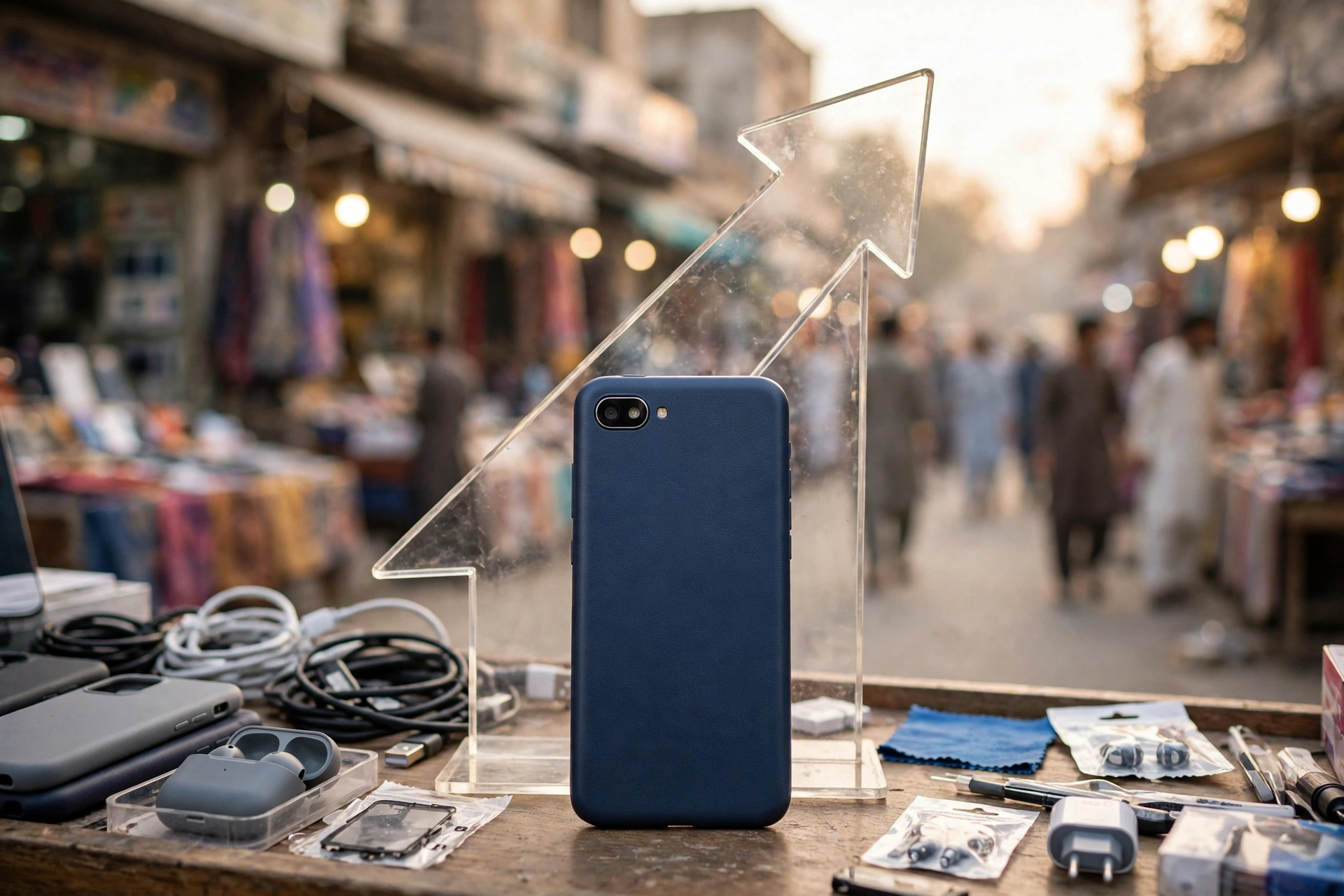
Smartphone prices in Pakistan have jumped sharply, with major brands raising handset prices by Rs. 15,000 to Rs. 30,000, according to a report published by Dawn on October 26, 2026. The rise has hit budget buyers hardest: a basic smartphone with 4GB of RAM and 64GB of storage, previously sold for around Rs. 20,000 to Rs. 22,000 in Karachi markets, is now being quoted at Rs. 35,000 to Rs. 40,000. For many families, a phone that was already a stretch has suddenly moved out of reach.
What the October 26 report found
Dawn's report, based on Karachi retail markets, describes an increase affecting major brands rather than a single model or shop. Shopkeepers told the newspaper that sales have fallen sharply since prices moved, and that continued price changes and supply shortages have left the market uncertain. One shopkeeper quoted in the report said that when a phone costing Rs. 20,000 rises to Rs. 30,000 or Rs. 35,000, many customers simply cannot afford it any more.
The clearest example in the report is the entry-level segment. A phone with 4GB of RAM and 64GB of storage is the kind of device students, delivery riders, small shopkeepers and first-time smartphone users depend on for online classes, digital banking, ride-hailing, government services and everyday communication. At Rs. 20,000 to Rs. 22,000 it was already a careful purchase. At Rs. 35,000 to Rs. 40,000, the same class of device costs roughly 60 to 80 percent more than it did before, depending on which end of each range a buyer compares. To put that rise in perspective, you can work out the exact percentage for any two prices with a free percentage calculator before you visit a shop, so a dealer's claim of a small increase can be checked in seconds.
Why prices are rising, according to dealers and manufacturers
The people quoted in the Dawn report point to component costs, not a new tax hike, as the main driver. Muhammad Rizwan Irfan, president of the Karachi Electronics Dealers Association, told Dawn that there had been no significant increase in taxes large enough to explain a jump of this size, and that rising chip costs were the major factor.
Mian Abdul Rehman, a representative of the Pakistan Mobile Phone Manufacturers Association, gave a more specific explanation: the cost of RAM and ROM, the memory components inside every phone, has risen because demand from artificial intelligence companies, robotics firms and data centres has grown much faster than production. AI companies are buying memory at high prices, he said, and phone makers are finding it increasingly difficult to absorb that extra cost, so part of it is now reaching the shop price. The report is careful to note that the exact contribution of each factor has not been independently quantified, and some consumers have blamed other causes, including taxes and international trade disruption. The dealer and manufacturer view reported by Dawn, however, is consistent: memory costs are the main pressure, not a sudden tax change.
Who is hit hardest
Budget buyers feel a Rs. 15,000 to Rs. 30,000 increase far more than flagship buyers do. On a phone that cost Rs. 20,000, a Rs. 15,000 rise nearly doubles the price. On a phone that cost Rs. 300,000, the same rise is a much smaller share of the total. That is why the report's focus on low- and middle-income households matters: for these buyers, a phone is not a luxury upgrade but the main way to study, work, bank and stay in touch.
The report also notes a shift towards used and refurbished phones, sometimes called kit phones, as new devices move out of budget. That shift carries its own risks. A used phone may look like a bargain, but without a warranty, a verified PTA status and a battery health check, it can cost more in repairs than it saves at purchase. Buyers who go down this route should read a careful checklist first and never skip the PTA approval check, which confirms the phone will keep working on Pakistani networks.
What Pakistani buyers should do now
- Compare at least three shops before buying. Prices are moving quickly and vary by shop, city and stock. A quote from one market is not the market price.
- Do not assume last month's price still applies. Ask for the current official price and the market price separately, and check whether the phone is PTA-approved official stock or grey-market stock.
- Consider whether you actually need an upgrade now. If your current phone still handles calls, messaging, banking and classes, waiting a few weeks may be cheaper than buying at a peak, especially with sale events such as Daraz 11.11 approaching in November.
- Be extra careful with used phones. Check the IMEI, PTA status, battery condition, original accessories and warranty, and buy from a seller who will put the deal in writing.
- Protect the phone you already own. A good case, a screen protector and a genuine charger cost far less than a replacement phone at today's prices, and you can browse protective accessories on our JustMobilePk Store page.
Will prices come back down?
Nobody in the report promises a fall. If memory prices stay high because AI demand keeps growing, phone prices may stay elevated for some time. If memory supply catches up, some of the pressure could ease, but dealers also warn about continued fluctuations and shortages, which makes short-term predictions unreliable. The honest advice for buyers is therefore practical rather than speculative: buy only when you need a phone, compare prices properly, and do not rush into a purchase because a shopkeeper warns that prices will rise again tomorrow. That warning may be true, but it is also a sales tactic, and it should never replace a price check.
The October 26 report is a reminder of how quickly the cheapest phones in Pakistan can become expensive. For buyers on a tight budget, the best response is not panic but patience, comparison and verification: check the price in more than one place, confirm PTA approval, and make sure the phone you buy is worth what you are paying at today's rates, not last month's.
Frequently Asked Questions
How much have smartphone prices risen in Pakistan?
According to Dawn's report published on October 26, 2026, major brands have raised prices by Rs. 15,000 to Rs. 30,000 in Karachi retail markets, with a basic 4GB RAM and 64GB storage phone rising from around Rs. 20,000 to Rs. 22,000 to around Rs. 35,000 to Rs. 40,000.
Why are smartphone prices rising in Pakistan?
Dealers and manufacturers quoted by Dawn blame rising chip and memory costs, particularly RAM and ROM, driven by growing demand from AI companies, robotics and data centres, rather than a significant new tax increase.
Are used phones a good alternative now?
Used phones can save money, but they carry risks around warranty, PTA approval and battery health. Always verify the IMEI and PTA status, inspect the phone in person, and buy from a seller who offers a written receipt.
Should I buy a phone now or wait?
If your current phone still meets your needs, waiting and comparing prices is usually wiser than rushing a purchase during a price spike. If you must buy now, compare at least three shops and confirm you are getting PTA-approved official stock with a warranty.
